
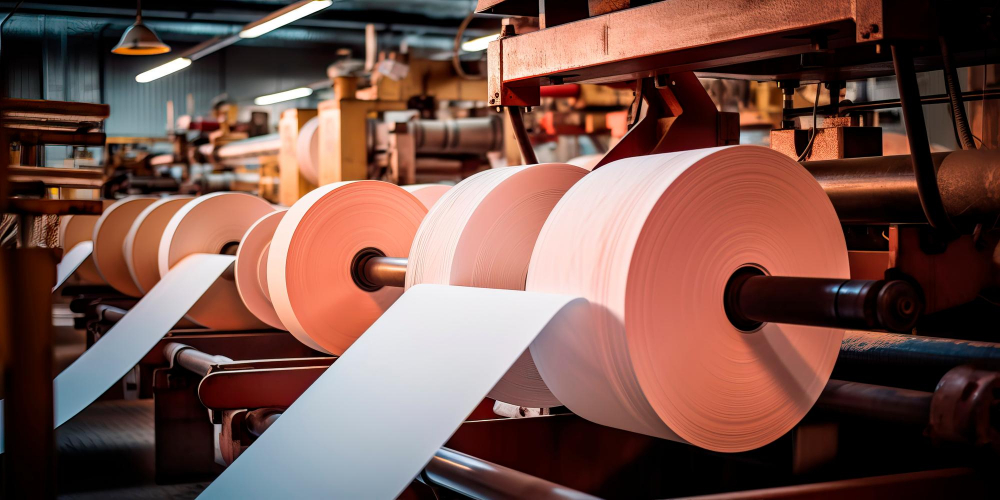
Paper manufacturing is a highly technical process where even a small operational issue can affect production speed, paper quality, and overall manufacturing costs. Modern paper machines run continuously at high speeds, making them sensitive to problems such as excessive foam, poor drainage, stickies, and strength-related defects.
Many of these challenges can be reduced or prevented with the right process chemicals. Understanding which chemical addresses a specific problem helps paper mills improve efficiency, reduce downtime, and maintain consistent product quality.
Why Do Paper Machine Problems Occur?
Paper machine issues can arise due to several factors, including:
- Poor fiber quality
- High machine speeds
- Recycled fiber contamination
- Improper chemical dosing
- Changes in pH or water chemistry
- Inadequate cleaning and maintenance
- Microbial growth in process water
When these factors are not properly controlled, they can lead to production losses, increased chemical consumption, and quality defects.
1. Excessive Foam Formation
The Problem
Foam is one of the most common issues in paper mills. It forms in stock chests, machine tanks, and process water systems due to air entrainment and the presence of surfactants or organic contaminants.
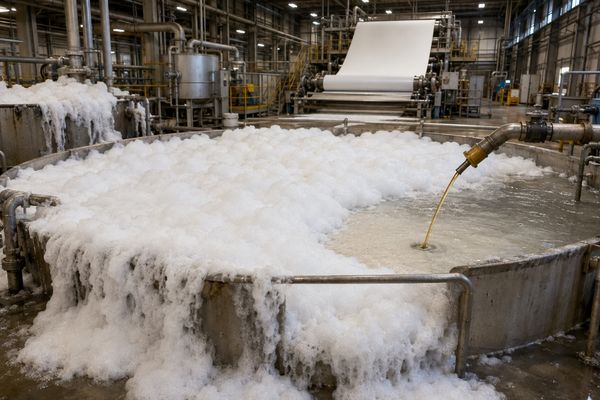
Impact on Production
- Overflow from tanks
- Poor sheet formation
- Inconsistent basis weight
- Reduced machine efficiency
Chemical Solution
Oil-Based Defoamer helps break down foam quickly and prevents excessive foam accumulation during the papermaking process.
2. Poor Drainage on the Paper Machine
The Problem
Efficient water removal is essential for maintaining machine speed and reducing energy consumption. Poor drainage slows down production and leaves the paper web excessively wet.
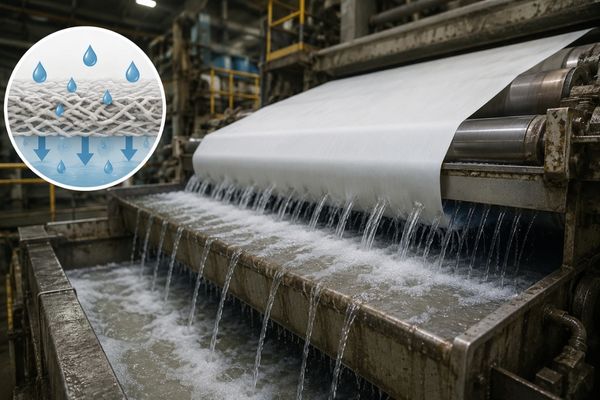
Common Causes
- Fine fiber buildup
- High filler content
- Improper retention
- Contaminated process water
Chemical Solution
Retention and Drainage Chemicals improve water removal, enhance fiber retention, and help increase machine speed while reducing steam consumption.
3. Low Dry Strength of Paper
The Problem
Paper that lacks sufficient dry strength may tear during winding, converting, printing, or transportation.
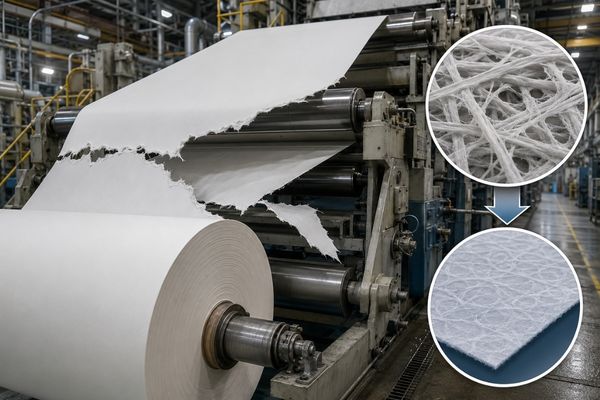
Effects
- Frequent web breaks
- Higher rejection rates
- Customer quality complaints
Chemical Solution
Dry Strength Resin and Cationic Starch improve fiber-to-fiber bonding, resulting in stronger and more durable paper.
4. Poor Wet Strength Performance
The Problem
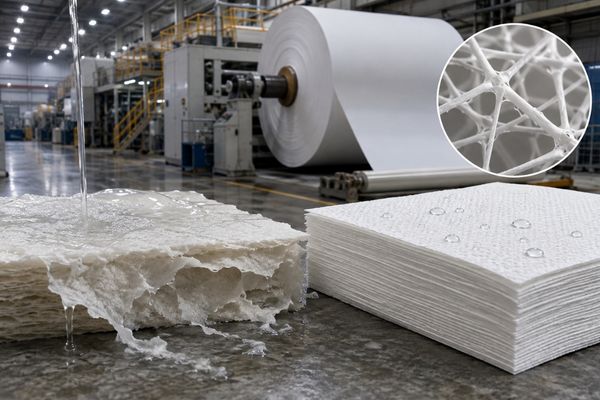
Certain paper grades, such as tissue, packaging, and specialty papers, must retain strength when exposed to moisture. Without adequate wet strength, the paper can lose its integrity during use.
Chemical Solution
Wet Strength Resin helps maintain paper strength even under wet conditions, making it suitable for moisture-sensitive applications.
5. Stickies and Pitch Deposits
The Problem
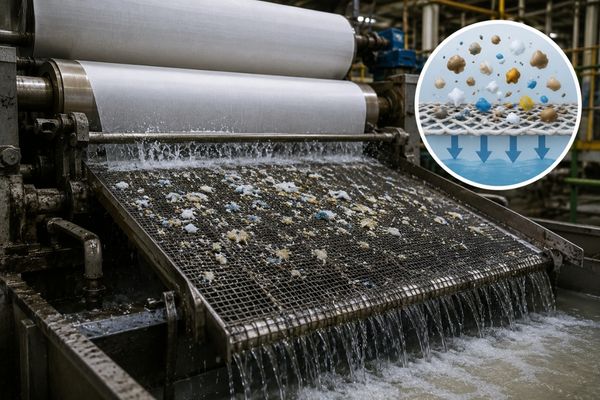
Recycled paper mills often face contamination from adhesives, labels, coatings, and other sticky materials collectively known as “stickies.”
Consequences
- Deposits on wires and felts
- Machine contamination
- Paper defects
- Unplanned shutdowns
Chemical Solution
Stickies Control Chemicals help disperse, passivate, or remove sticky contaminants before they accumulate on critical machine components.
6. Felt Contamination and Reduced Dewatering
The Problem
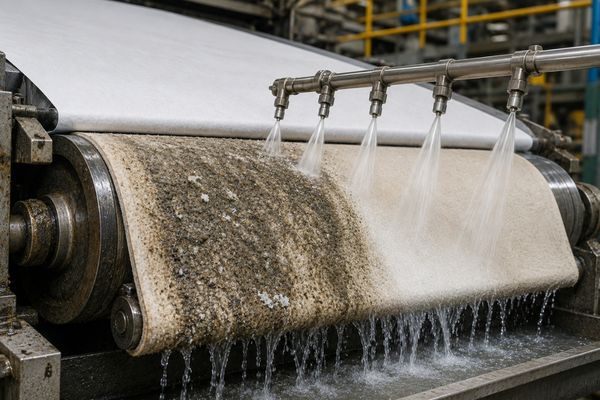
Press felts gradually become clogged with fibers, fillers, pitch, and other deposits, reducing their ability to remove water effectively.
Impact
- Poor drainage
- Higher moisture content
- Increased energy usage
- Shorter felt life
Chemical Solution
Felt Cleaning and Conditioning Chemicals help remove deposits, restore felt permeability, and improve overall dewatering performance.
7. Uneven Surface Quality
The Problem
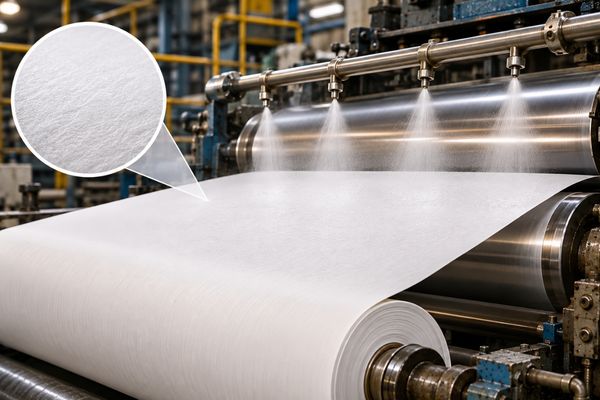
Surface defects can affect printing quality, coating performance, and the appearance of the finished paper.
Typical Issues
- Rough surface texture
- Poor ink holdout
- Inconsistent coating
- Dusting and linting
Chemical Solution
Surface Additives and Surface Sizing Chemicals improve surface strength, printability, and overall paper finish.
8. Slime and Bacterial Growth
The Problem
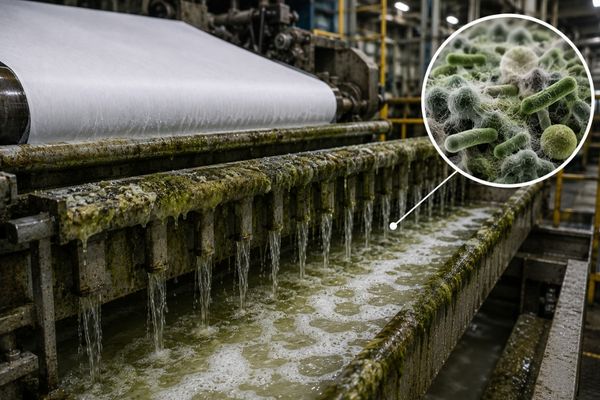
Warm process water provides an ideal environment for microbial growth. Bacteria and fungi can form slime deposits that interfere with paper machine operation.
Effects
- Unpleasant odor
- Deposit formation
- Sheet breaks
- Reduced machine cleanliness
Chemical Solution
Microbiological Control Chemicals help control bacterial growth and maintain a cleaner process water system.
9. Poor Retention of Fibers and Fillers
The Problem
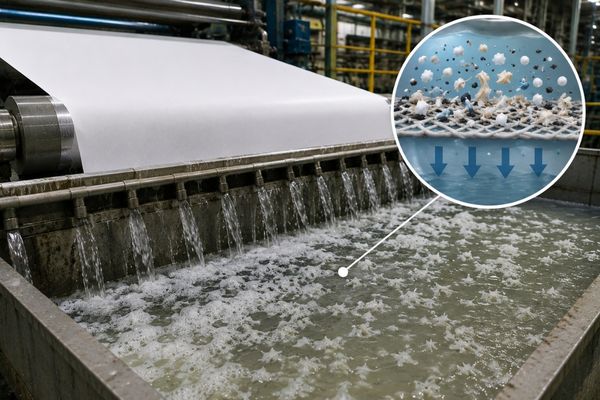
When fibers and fillers are not properly retained in the paper sheet, valuable raw materials are lost through the white water system.
Business Impact
- Higher raw material costs
- Lower production efficiency
- Inconsistent paper properties
Chemical Solution
Retention Aids improve the capture of fibers and fillers, leading to better sheet formation and reduced material loss.
10. Process Water Quality Problems
The Problem
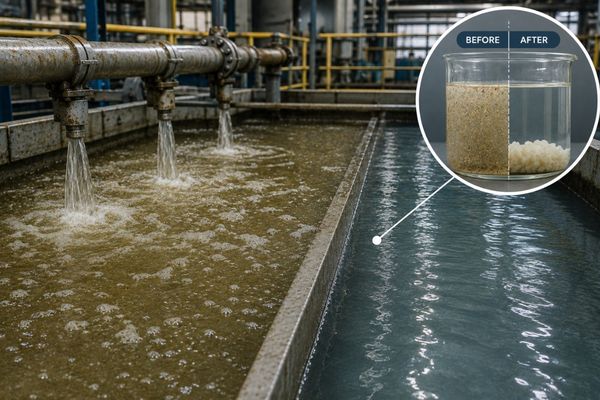
Suspended solids, dissolved contaminants, and unstable water chemistry can negatively affect multiple stages of the papermaking process.
Chemical Solution
Coagulants and Flocculants help improve water clarity, reduce suspended solids, and support more stable process conditions.
How the Right Chemicals Improve Paper Machine Performance
A well-designed chemical program can provide several operational benefits:
Productivity
Operational gains
- Reduced machine downtime
- Higher production speed
- Improved drainage efficiency
- Better retention of raw materials
Quality
Quality improvements
- Enhanced paper strength and durability
- Cleaner machine operation
- Consistent product quality
- Lower overall operating costs
Instead of treating individual problems separately, many paper mills achieve better results by implementing an integrated chemical management approach tailored to their specific paper grade and production conditions.
Choosing the Right Chemical Solution
Selecting the appropriate chemical depends on several factors:
- Type of paper being produced
- Virgin or recycled fiber usage
- Machine speed and configuration
- Process water characteristics
- Desired strength and surface properties
- Production and cost optimization goals
Working with experienced technical specialists can help identify the root cause of machine problems and optimize chemical dosage for maximum performance.
Conclusion
Paper machine problems are inevitable in any manufacturing operation, but they do not have to become costly production bottlenecks. Issues such as foam, poor drainage, stickies, low strength, and microbial contamination can often be minimized with the right specialty chemicals and process optimization strategies.
A proactive approach to chemical management not only improves machine performance but also enhances paper quality, reduces waste, and supports long-term operational efficiency.
For paper mills looking to optimize production and address common machine challenges, Balaji Chem Solutions offers a comprehensive range of specialty paper chemicals, including defoamers, starches, strength resins, surface additives, retention aids, stickies control solutions, felt cleaning chemicals, microbiological control products, and water treatment chemicals. Their technical expertise and product portfolio are designed to help manufacturers achieve cleaner operations, higher productivity, and consistent paper quality.
Frequently Asked Questions
No. Each paper process chemical is formulated for a specific purpose. However, a well-planned chemical program can address multiple machine challenges simultaneously and improve overall performance.
Yes. Poor water quality can cause scaling, deposits, microbial growth, and reduced chemical effectiveness, leading to lower machine efficiency, quality issues, and increased maintenance requirements.
Yes. Optimized paper process chemicals improve drainage, reduce foam and deposits, and enhance sheet formation, allowing paper machines to operate more efficiently at higher production speeds.
Regular monitoring helps maintain correct chemical dosage, identify process changes early, optimize machine performance, improve paper quality, reduce waste, and minimize unexpected production downtime.
You can purchase high-quality paper process chemicals from trusted manufacturers like Balaji Chem Solutions, which offers specialty chemicals and technical support tailored to various paper manufacturing applications.