
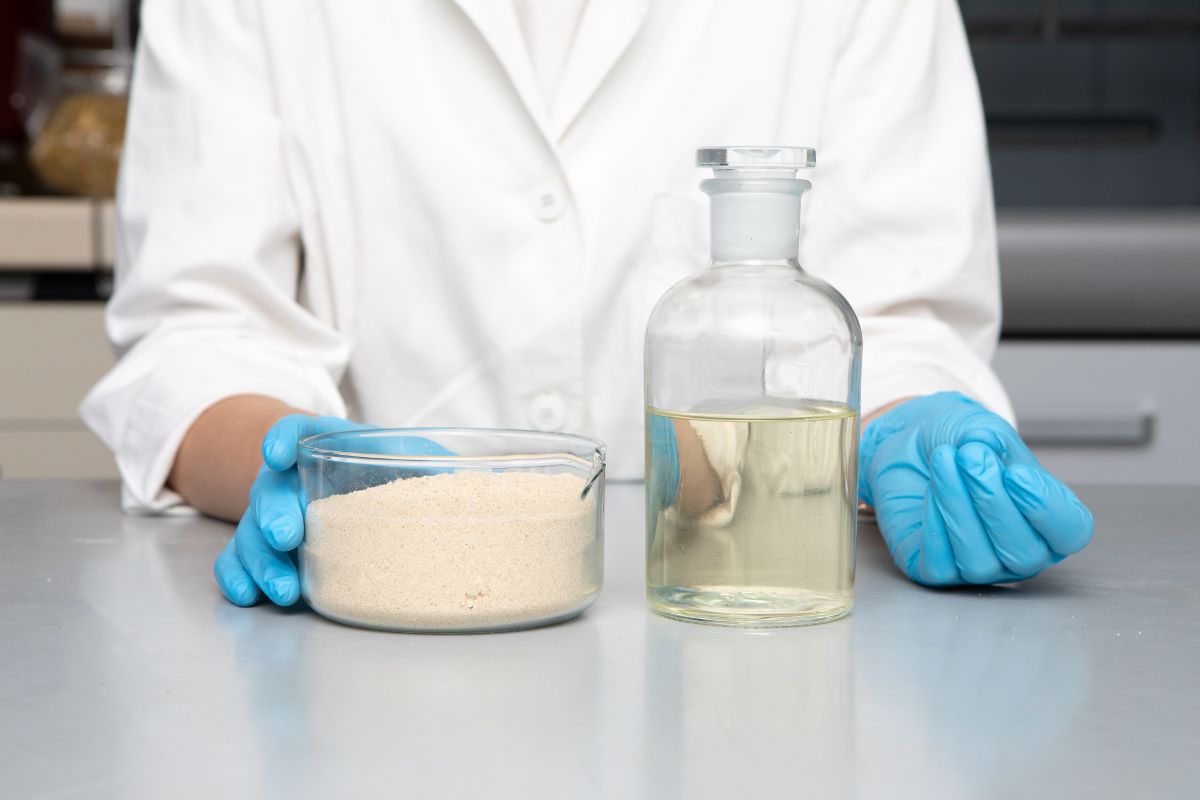
Oxidized starch is a widely used modified starch, especially popular in the paper, textile, adhesive, and packaging industries. Its popularity stems from its low viscosity, enhanced film-forming properties, and eco-friendly nature. We’ll first look at the uses and benefits of oxidized starch, followed by answers to key industry-related questions like what it is, what types exist, how it’s used in paper, and which oxidizing agents are involved in its production.
What is Oxidized Starch?
Oxidized starch is a type of modified starch obtained by treating natural starch with oxidizing agents like sodium hypochlorite. This process breaks down the long-chain molecules of starch, reducing its molecular weight and making it more suitable for industrial applications that need smooth application and fast drying.
Key Properties of Oxidized Starch:
- Lower molecular weight
- Higher carboxyl content
- Improved clarity and whiteness
- Consistent viscosity across temperature/pH ranges
It is commonly used when film strength, brightness, and adhesive quality are essential, such as in paper coatings or printing paper.
What are the Four Types of Starch?
Before discussing oxidized starch in more detail, it’s important to know the four major types of starch used in various industries:
1. Native Starch
- Extracted from corn, potato, wheat, or tapioca
- Unmodified and used in food and basic adhesive applications
2. Modified Starch
- Starches that are physically, chemically, or enzymatically altered
- Improves characteristics like solubility, thickening, or resistance to shear
3. Pregelatinized Starch
- Cooked and dried starch
- Instantly soluble in cold water
- Used in instant foods and adhesive solutions
4. Oxidized Starch
- Treated with oxidizing chemicals
- Offers low viscosity, high gloss, and better coating performance
- Widely used in paper, textile, and adhesive industries
Uses of Oxidized Starch – Industrial Applications
Oxidized starch is preferred in many applications where smoother finish, better binding, and reduced viscosity are essential.
1. Paper Industry
- Used in surface sizing and coating formulations
- Enhances printability, brightness, and smoothness of paper
- Improves ink holdout and drying time
2. Textile Industry
- Applied as a warp sizing agent to strengthen yarn during weaving
- Increases lubrication and reduces breakage during processing
3. Adhesive Industry
- Used in making corrugated box adhesives, lamination pastes, and gums
- Offers better film clarity, tackiness, and flow
4. Food-Grade Applications
- In limited and highly refined forms, used in coatings and texturizers for food packaging films (must be food-safe grade)
Benefits of Oxidized Starch
- Low viscosity – easily pumpable, even at high concentrations
- Excellent film-forming properties
- Improves surface brightness and smoothness
- Increases folding strength and reduces paper dusting
- Supports eco-friendly production – biodegradable and renewable
- Cost-effective alternative to synthetic binders
What is Oxidized Starch for Paper Industry?
In the paper industry, oxidized starch is a preferred chemical due to its ability to enhance the physical and visual properties of paper without synthetic additives.
Major Roles in Paper Manufacturing
- Surface Sizing Agent: Applied to raw paper to control porosity and improve print quality
- Coating Binder: Acts as a glue to bind pigments to the paper surface
- Strength Enhancer: Improves folding strength, stiffness, and resistance to picking during printing
- Brightness Booster: Increases whiteness and reduces dullness
Benefits in Paper Processing
- Faster drying = more energy savings
- Smooth finish = higher print quality
- Ink retention = cleaner graphics
- Environment-friendly = meets sustainability standards
What are the Oxidizing Agents of Starch?
To convert native starch into oxidized starch, manufacturers use oxidizing agents. These agents break starch chains, introduce carboxyl and carbonyl groups, and adjust its solubility and flow behavior.
Common Oxidizing Agents Used in the Industry
1. Sodium Hypochlorite (NaOCl)
- Most widely used
- Fast reaction time and cost-effective
- Common in paper-grade oxidized starch
2. Hydrogen Peroxide (H₂O₂)
- Greener alternative
- Used where environmental standards are stricter
- Common in food and cosmetic-grade oxidized starch
3. Potassium Permanganate (KMnO₄)
- Used for stronger oxidation where high carboxyl content is required
4. Periodates & Persulfates
- Used in specialty applications for precise control over oxidation
These agents determine the final viscosity, clarity, and reactivity of the oxidized starch product.
Where is Oxidized Starch Used?
Oxidized starch is used across multiple industries due to its functional versatility, eco-friendly nature, and film-forming properties. Here are the key sectors where it plays a critical role:
1. Paper Industry
- Largest consumer of oxidized starch
- Used in surface sizing, coating, and paper strengthening
- Improves printability, brightness, and gloss
2. Textile Industry
- Acts as a warp sizing agent for yarns
- Provides lubrication and reduces thread breakage
- Enhances weaving efficiency and finish
3. Adhesive & Packaging Industry
- Used in the formulation of box adhesives and lamination gums
- Offers better bonding, tackiness, and viscosity control
4. Food Processing & Packaging
- In refined, food-grade form, used for biodegradable films and coatings
- Improves flexibility and printability of packaging
5. Construction & Paints (in some cases)
- Acts as a thickener and binder in certain eco-friendly paints and plasters
- Enhances spreadability and finish
Oxidized starch’s adaptability and sustainability make it valuable in both high-speed production environments and environmentally conscious applications.
Conclusion:
Oxidized starch is a highly versatile and sustainable ingredient used across industries, especially in the paper sector. It enhances coating smoothness, improves ink retention, and supports high-speed production with better drying performance. With various types of starch available, oxidized starch stands out for its low viscosity and eco-friendly nature. Produced using oxidizing agents like sodium hypochlorite and hydrogen peroxide, it serves as a reliable, biodegradable alternative to synthetic binders. Whether you’re in paper manufacturing, textiles, or adhesives, understanding the role and chemistry of oxidized starch helps unlock better product performance and production efficiency.